
Special Edition: Crossroads at 250
The Battle for America’s Next Quarter Millennium

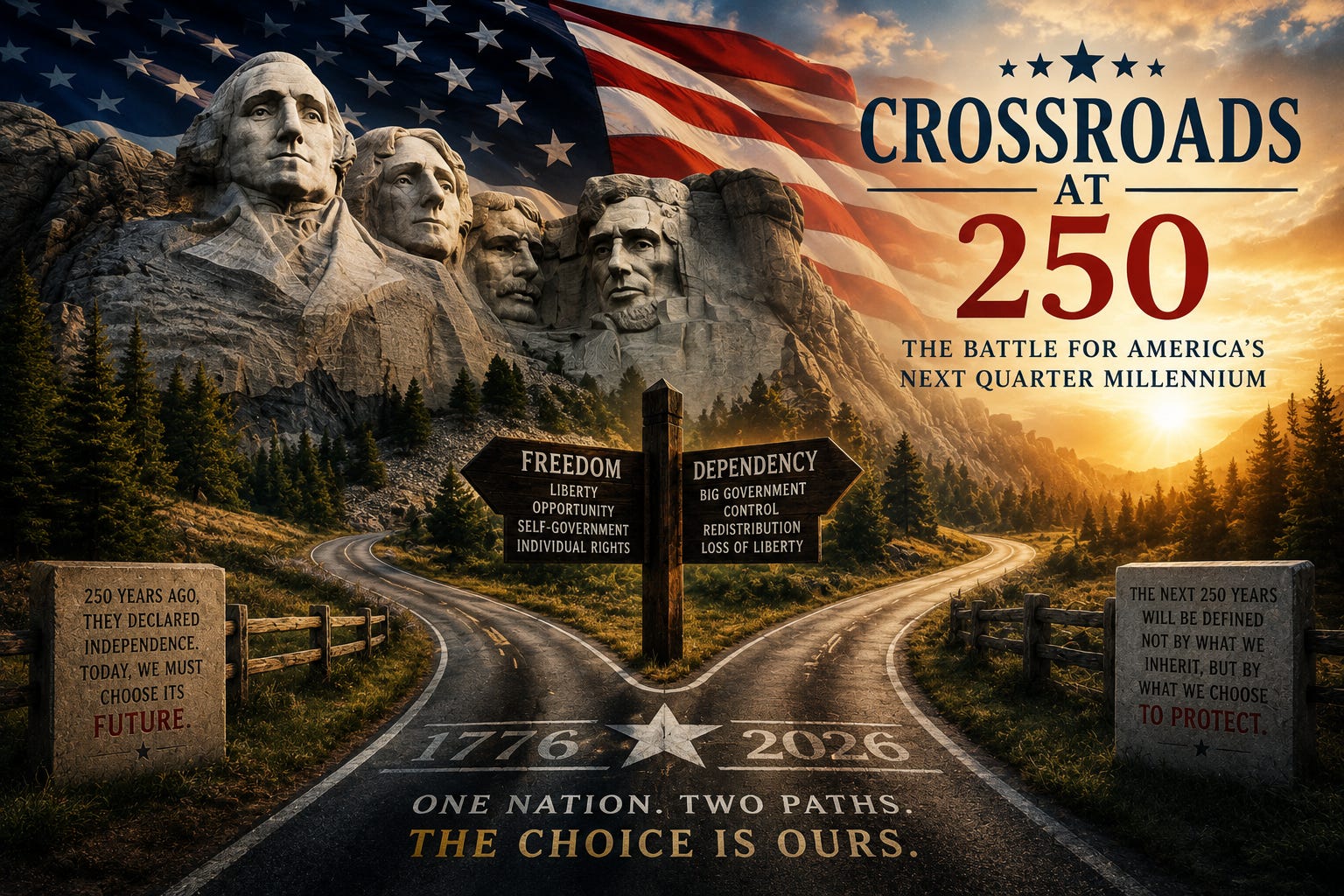
For more than a year and a half, Zoose Political Index has been tracking the deepening polarization of America.
Week after week, election after election, poll after poll, we have watched the country divide not simply over candidates, but over the meaning of America itself.
What began as an analysis of political mood, voter intensity, social sentiment, and party coalitions has increasingly become something larger: a study of two parties being pulled by movements that no longer simply want to govern America, but to redefine it.
That is why this article begins in Morristown, New Jersey.
Because Morristown is not just where I live and where Zoose is headquartered. It is one of the places where the American experiment was tested before anyone knew whether it would survive.
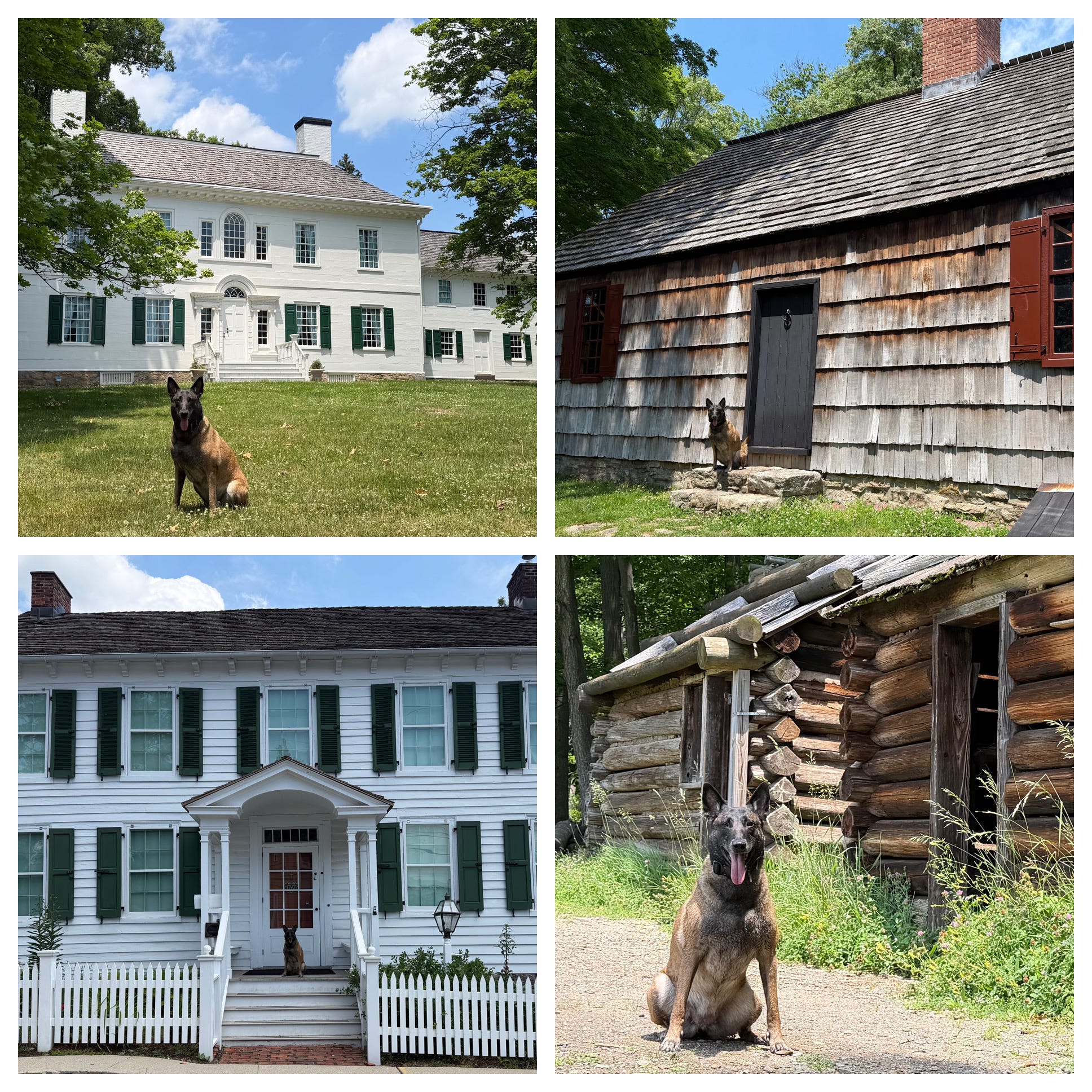
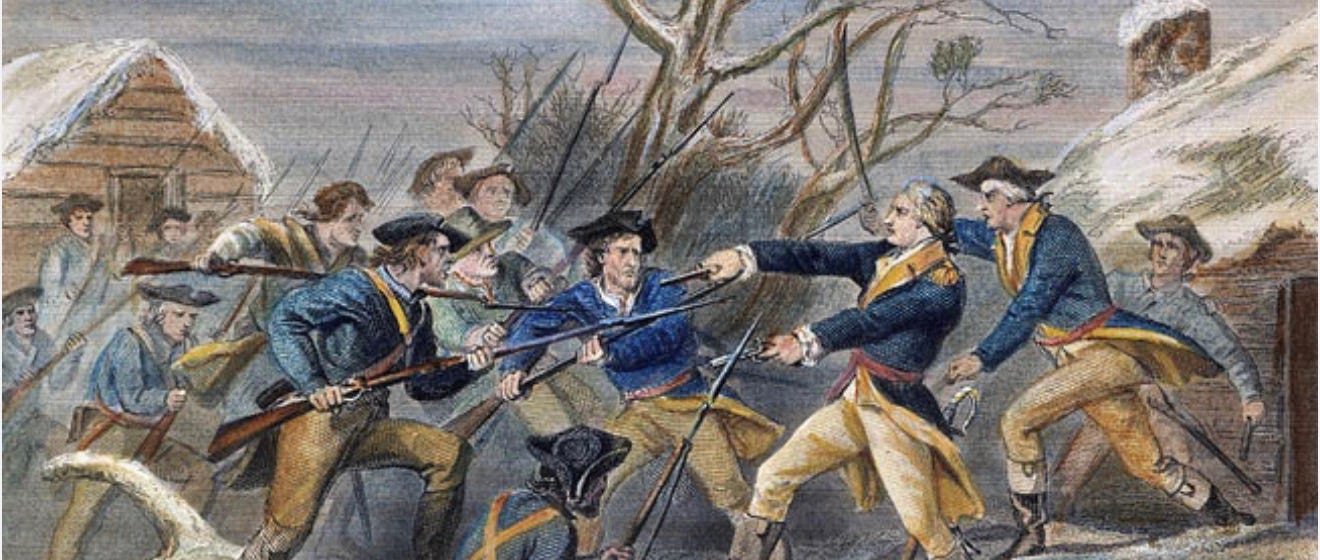
Here, General George Washington made his headquarters at the Ford Mansion. Here, at Jockey Hollow, the Continental Army endured one of the harshest winters of the Revolutionary War. Here, in the geographic heart of the colonies between Philadelphia and New York, New Jersey became the crossroads of the American Revolution.
And now, as America approaches its 250th birthday, the country finds itself at another crossroads.
Not a military crossroads, but an ideological one.
The question is no longer whether America can survive its first great test. It did. The question now is what kind of nation America intends to become over its next 250 years.
The American Experiment
The Founders did not create a perfect nation. They created an experiment.
That experiment was rooted in a set of revolutionary ideas: natural rights, self-government, religious liberty, private property, representative institutions, and the belief that citizens should not live as subjects of a ruling class.
George Washington embodied restraint and republican virtue. He could have pursued power for himself. Instead, he repeatedly surrendered it. He resigned his military commission. He served two terms as president. He walked away.
Thomas Jefferson gave language to the American creed. The Declaration of Independence asserted that human beings possess rights not granted by government, but inherent to their existence.
James Madison helped design the constitutional machinery intended to protect those rights from both monarchy and mob rule. Madison understood that concentrated power, whether held by a king, a legislature, or a temporary majority, could become dangerous if left unchecked.
At the center of that American experiment was the idea of ownership.
Property ownership was not merely about wealth. It was about independence. A citizen who owns property owns a stake in the future. A citizen who can build, farm, trade, speak, worship, publish, invest, and pass something to the next generation is not easily reduced to dependency.
The Founders disagreed on many things. They argued over banks, tariffs, federal power, states’ rights, foreign policy, and the shape of the new republic. But they broadly understood that liberty and ownership were connected.
Private property served as a shield against tyranny. Self-government required citizens with enough independence to stand on their own. Economic freedom, though not yet called capitalism in the modern sense, became part of the American foundation.
Adam Smith and the Economic Engine
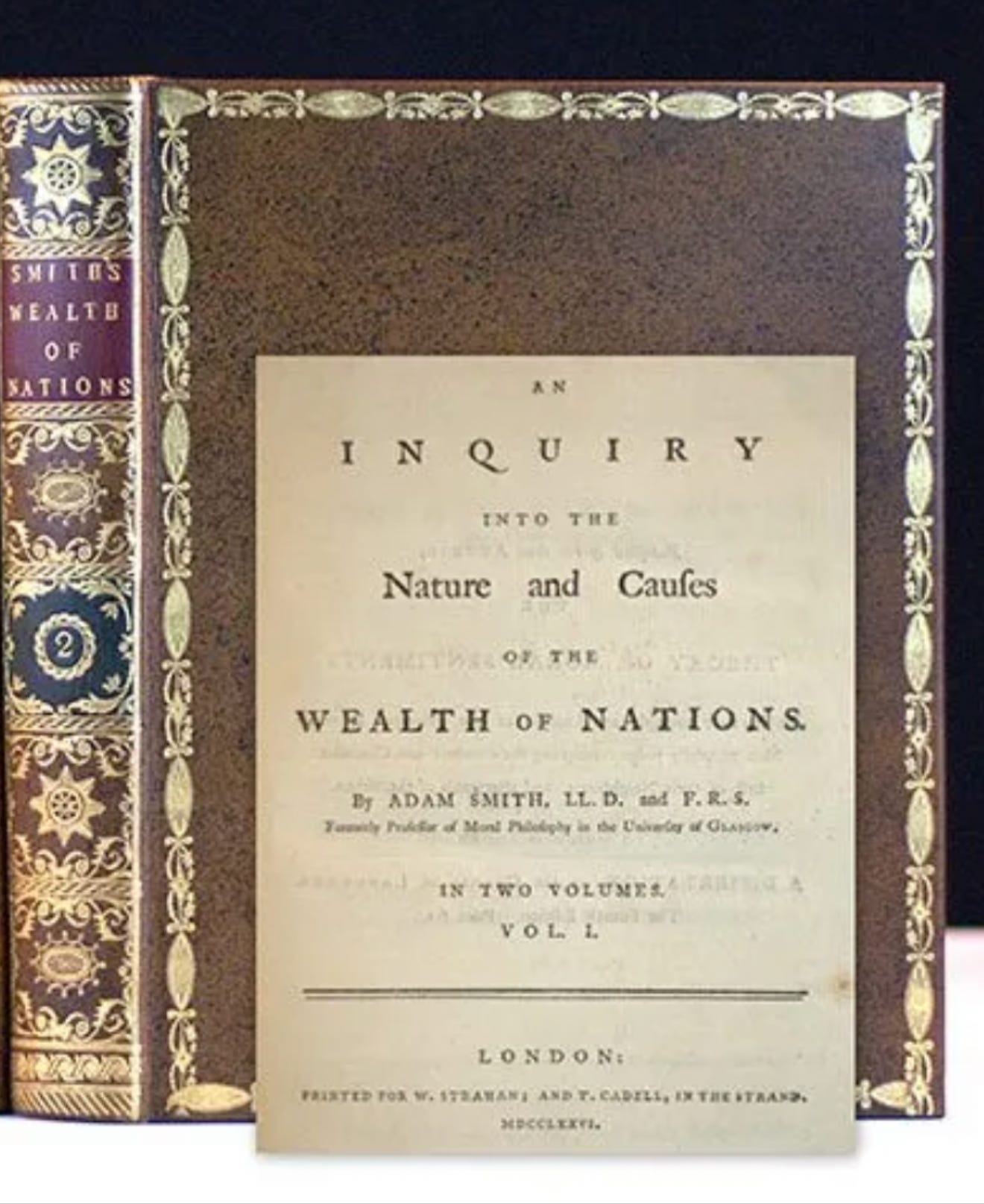
In 1776, the same year the Declaration of Independence was signed, Adam Smith published The Wealth of Nations.
That timing is extraordinary.
On one side of the Atlantic, American revolutionaries were declaring political independence from the British crown. On the other, Smith was describing the economic logic of free exchange, competition, specialization, and market-driven prosperity.
The Founders did not speak in the language of modern capitalism. The word itself became common later. They spoke instead of property, commerce, enterprise, agriculture, contract, trade, and liberty.
But the economic engine that developed from those principles was unmistakable.
America became a nation where individuals could create, build, risk, fail, try again, accumulate, invent, employ, and grow. The American promise was never that every person would achieve the same outcome. It was that no crown, class, or central authority would permanently assign a person to his station.
That is what made America different.
It was not merely a political revolution. It was an economic revolution.
The new republic embraced a system in which private initiative, voluntary exchange, and individual ambition could produce prosperity on a scale the world had never seen.
That did not mean government had no role. From the beginning, America debated how much government was necessary to secure liberty without suffocating it. But the presumption was clear: the citizen came first, government followed.
The individual was not a servant of the state. The state was supposed to serve the individual.
Progressivism From Teddy to FDR
American capitalism did not remain untouched or unchallenged.
By the late 19th and early 20th centuries, industrialization had created enormous prosperity, but also enormous concentrations of power. Railroads, oil companies, banks, and industrial trusts became so dominant that the question was no longer whether government should exist to protect capitalism, but whether government needed to restrain the abuses that could arise from capitalism itself.
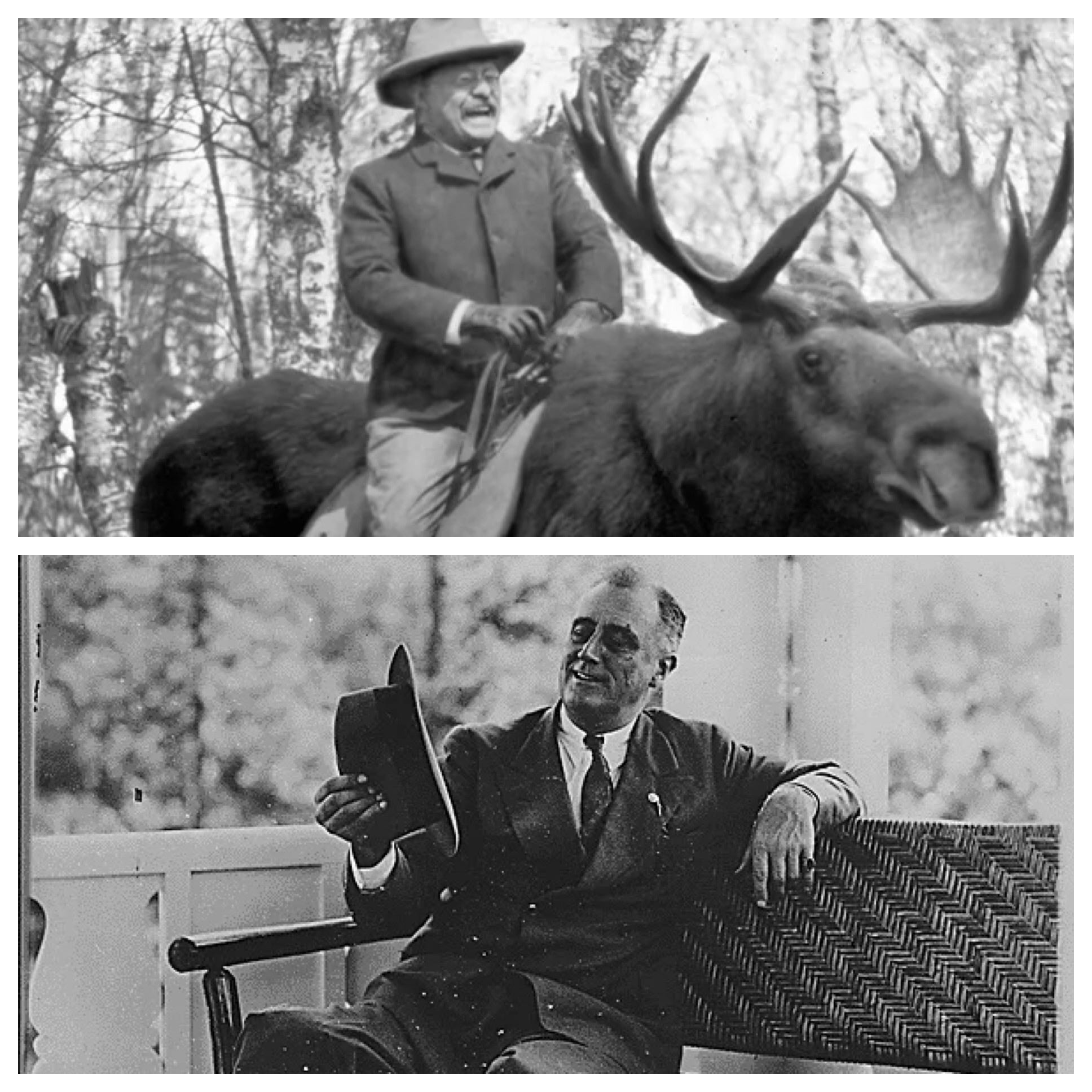
That was the age of Theodore Roosevelt.
Teddy Roosevelt was a Republican progressive, but not in the modern sense of the word. He believed in the American system. He believed in competition, national strength, conservation, and a strong civic life. But he also believed government had a role as referee when private power became too concentrated.
His trust-busting was not an attempt to abolish capitalism. It was an attempt to preserve competition. His conservation policies were not an attack on ownership. They were an effort to protect national resources for future generations.
His progressivism sought to discipline capitalism, not dismantle it.
Then came his cousin, Franklin D. Roosevelt.
FDR inherited a country in economic collapse. The Great Depression shattered confidence in banks, markets, businesses, and government itself. Millions were unemployed. Families lost homes. Savings disappeared. Breadlines became symbols of national despair.
FDR responded with the New Deal: Social Security, banking reform, labor protections, public works, unemployment relief, and the architecture of the modern safety net.
Here again, distinction matters.
FDR did not seek to replace capitalism. He sought to save it.
His argument was that a system unable to provide basic security during crisis could lose public legitimacy. The New Deal expanded the federal government, sometimes dramatically, but its purpose was not to abolish private property, eliminate markets, or create a one-party state.
FDR’s Democratic Party was not anti-capitalist. It was interventionist, reformist, and, at times, deeply controversial. But its aim was to stabilize capitalism by softening its harshest edges.
That distinction is essential to understanding where we are today.
Teddy Roosevelt sought to regulate capitalism.
Franklin Roosevelt sought to save capitalism.
Neither sought to replace capitalism.
The GOP: From Lincoln to Reagan to Trump
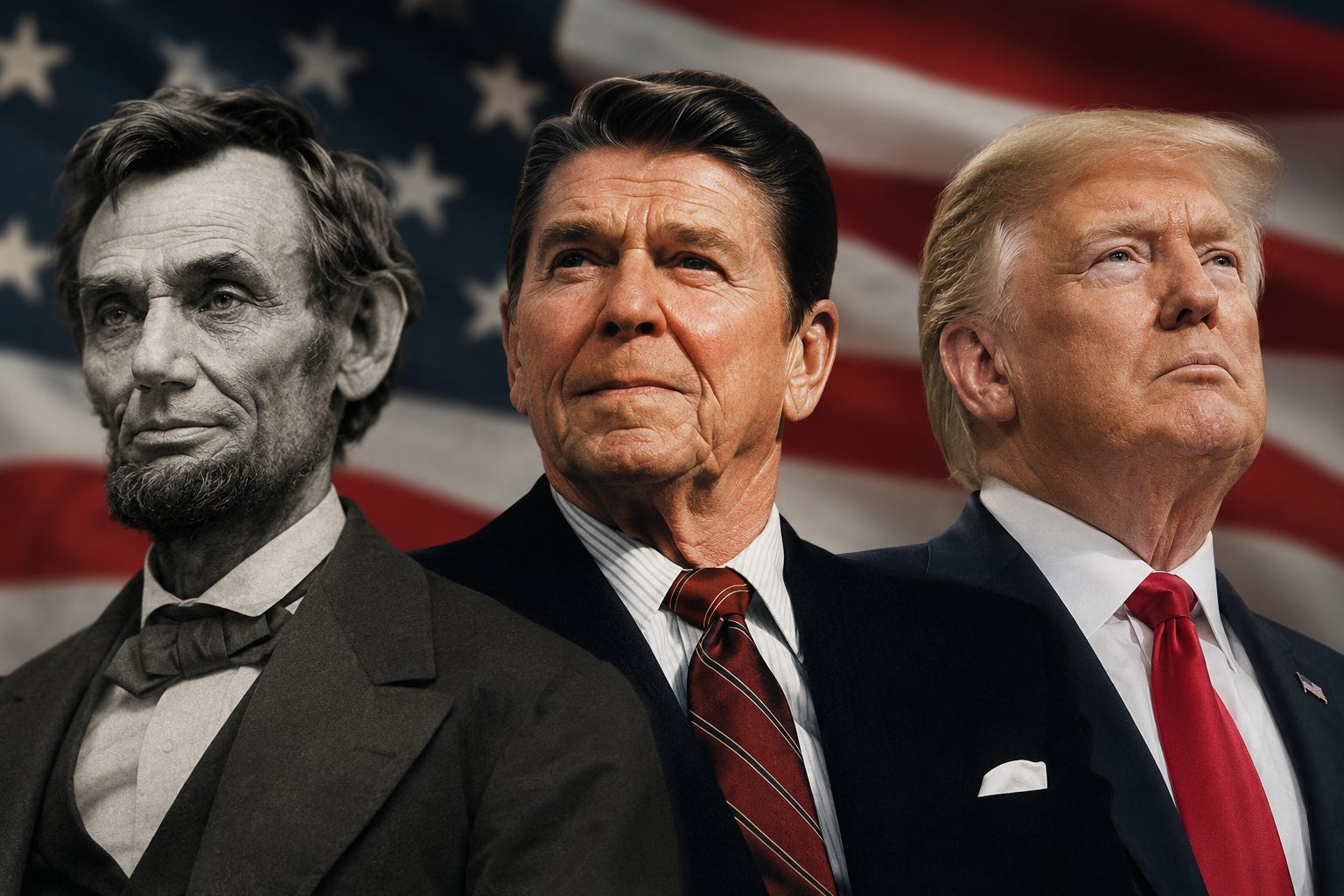
The Republican Party has its own crossroads.
The GOP was born as the party of Lincoln, Union, emancipation, and the preservation of the republic. It later became associated with business, industry, growth, anti-communism, and national strength.
Reagan then redefined modern conservatism around markets, lower taxes, military power, patriotism, and faith in individual initiative.
But Trump changed the party again.
MAGA is not simply Reagan conservatism with a louder voice. It is more populist, more nationalist, more protectionist, more skeptical of global institutions, more hostile to elite cultural authority, and more focused on the idea that ordinary Americans are fighting a corrupt establishment.
To Trump supporters, that shift was necessary. MAGA grew out of real frustrations: deindustrialization, border insecurity, trade deals, endless wars, cultural alienation, media distrust, and the belief that federal institutions had become unaccountable.
To Trump’s critics on the left, MAGA represents a different danger. They argue that Trump transformed the GOP from a conservative party into a personalist movement and that his rhetoric toward institutions, prosecutors, judges, the press, as well as retribution against political opponents, threatens democratic norms.
Whether one accepts that critique or not, it is now part of the national argument.
And that leads to the next Republican question: where does the GOP go after Trump?
Does it return to Reagan?
Does it extend MAGA through J.D. Vance?
Does it look to Marco Rubio as a bridge between Trumpism and traditional conservatism?
Does someone like Tulsi Gabbard represent the broader anti-establishment realignment?
Or does the party discover that Trump was the unique figure holding together a coalition that may be harder to maintain without him?
There is also a deeper tension inside the GOP.
MAGA speaks the language of working-class anger, forgotten towns, border communities, parents, small businesses, and voters who believe the system is rigged against them. But the Republican Party still depends heavily on wealthy donors, corporate networks, technology money, energy money, finance money, and billionaire-backed political infrastructure.
So is the GOP becoming a working-class populist party?
Or is it still the party of the billionaire class?
The answer may be both — for now.
That is the Republican crossroads.
The Democratic Party: From New Deal Liberalism to the Movement Left
The Democratic Party has its own crossroads.
For much of the 20th century, Democrats were the party of workers, unions, wages, pensions, jobs, Social Security, Medicare, civil rights, and the modern safety net. The old Democratic Party believed capitalism needed guardrails, not replacement.
The Civil Rights Movement forced America to confront the gap between its founding promises and its lived reality. That was a necessary correction. The country could not credibly celebrate liberty while denying equal rights to millions of its own citizens.
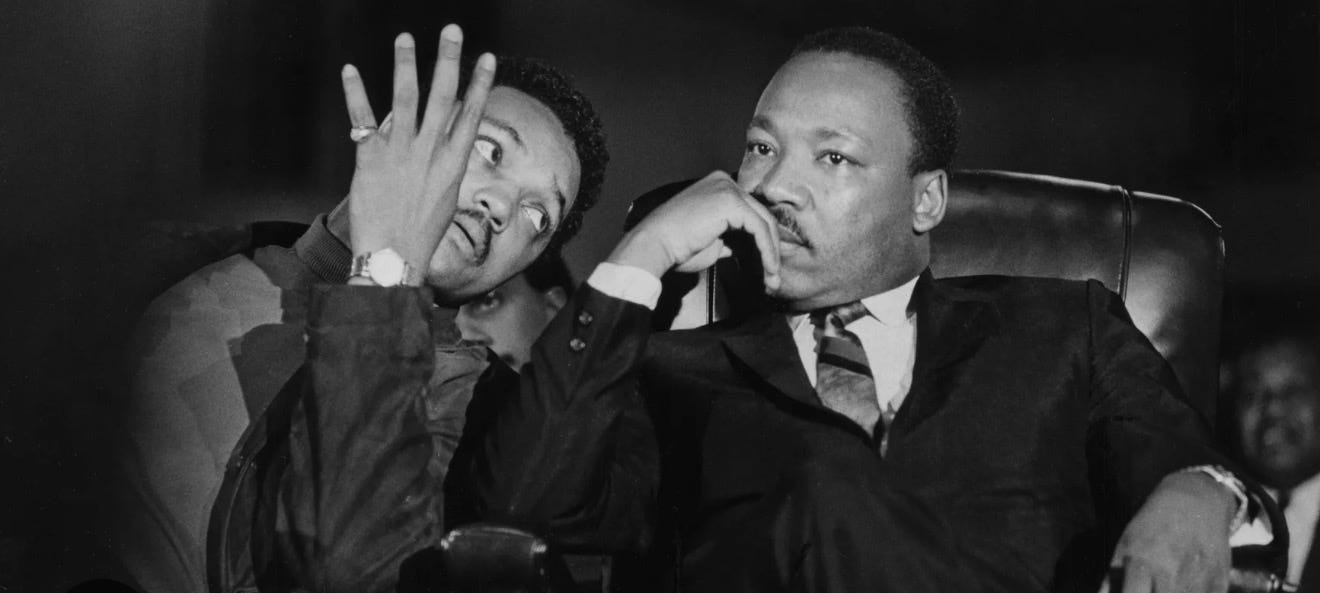
But beginning in the 1960s, the New Left began changing the language of Democratic politics.
The party’s center of gravity gradually moved from workers, wages, and economic security toward identity, institutional power, cultural conflict, and systemic critique.
Some of that shift addressed real injustices. Some expanded America’s understanding of liberty. Some forced the country to live closer to its own stated ideals. But over time, part of the progressive movement moved beyond equal opportunity and toward a deeper critique of America itself.
Capitalism was no longer always described as a system needing guardrails. It was described as exploitation. Private property was no longer always treated as a foundation of independence. It was sometimes framed as a tool of oppression. Free speech was no longer always treated as a universal right. It was increasingly weighed against claims of harm, power, and social consequence.
That shift did not make every progressive a socialist. It did not make every Democrat radical. But it changed the language of the party.
And as Cold War memory faded, socialism lost some of its old political toxicity.
For many younger voters, socialism no longer means Soviet communism. It means health care, lower rent, tuition-free college, stronger unions, taxing billionaires, and anger at Wall Street, corporations, landlords, and elites.
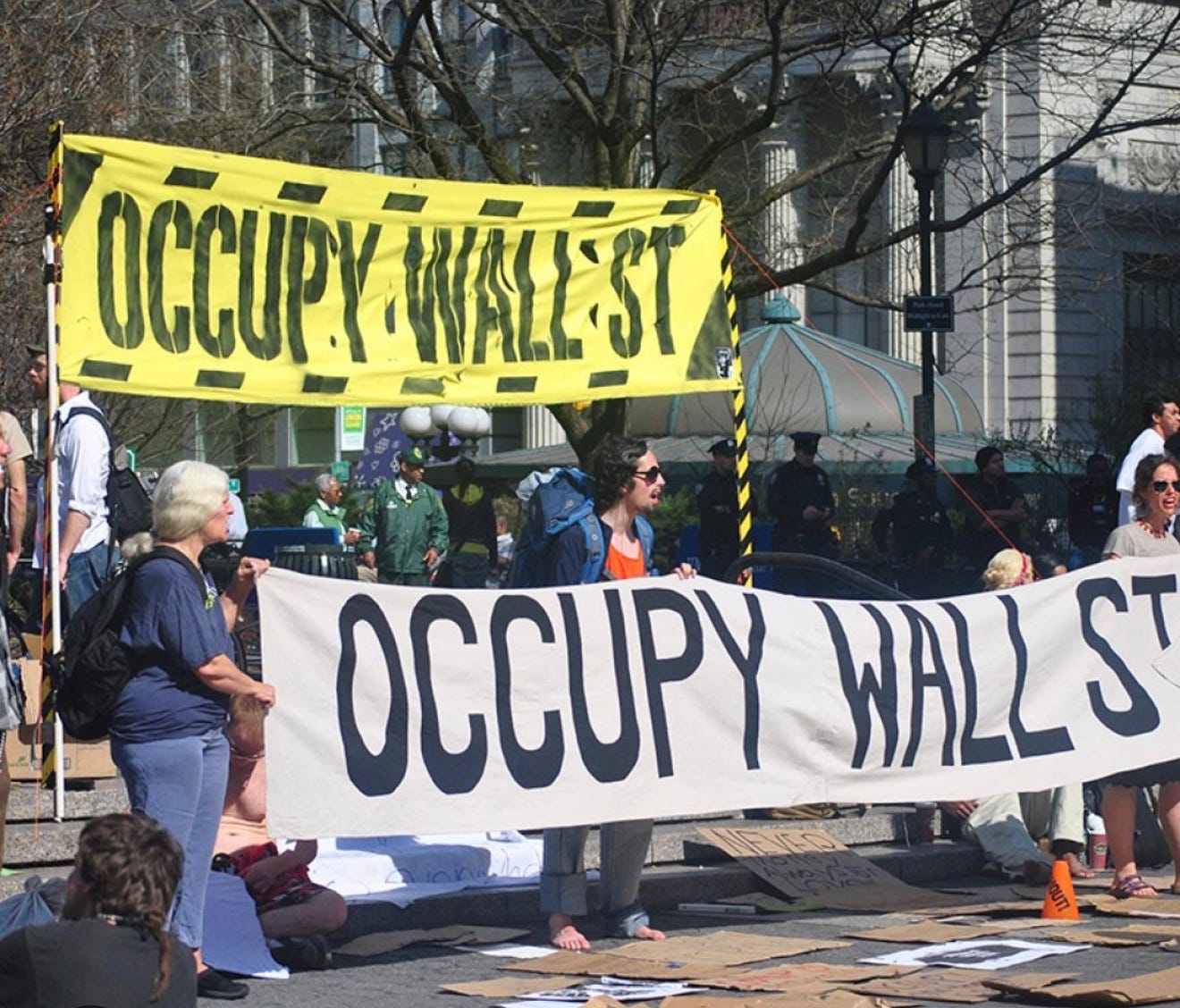
That created an opening.
Bernie Sanders did more than any modern national figure to make democratic socialism usable again inside Democratic politics. He brought back the language of working people versus billionaires, labor versus capital, and the many versus the few.
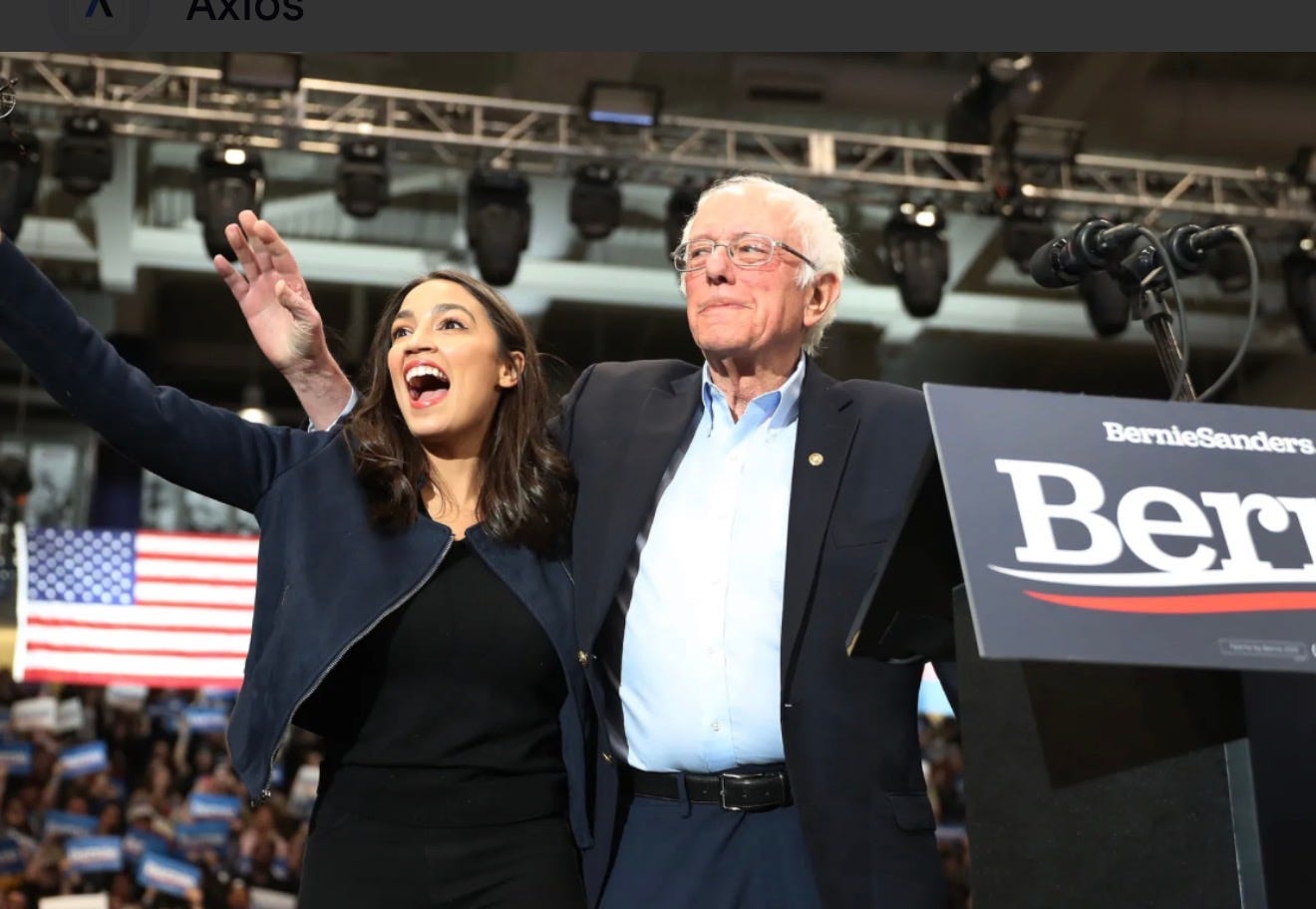
Then came Alexandria Ocasio-Cortez, the New York congresswoman better known as AOC.
Her 2018 upset victory over Joe Crowley, one of the most powerful Democrats in Congress, was not just a primary surprise.
It was a signal that democratic socialist politics could beat establishment Democratic power.
The Democratic Socialists of America, or DSA, moved from the margins into the national conversation. Mamdani showed how that language could move from activist politics into governing ambition. Newark Mayor, Ray Baraka showed the power of progressive coalition politics in urban Democratic power centers.
Together, they reveal a party no longer fighting only about policy, but about first principles.
Should capitalism be reformed, restrained, transformed, or replaced?
That is the Democratic crossroads.
The Democratic Party has its crossroads.
The Republican Party has its own.
Which means the question is no longer simply where either party has been, but where both are going.
Where Do the Parties Go From Here?
The Democratic Party is not one party right now. It is a coalition under pressure.
There are still old-school liberals who believe in markets, public safety, Israel, institutions, gradual reform, and electoral pragmatism.
There are democratic socialists who believe capitalism has failed too many people and government must take a far larger role in housing, health care, education, wages, and wealth distribution.
And there is a more radical progressive current that increasingly treats America’s institutions not as imperfect structures to be improved, but as oppressive systems to be confronted, delegitimized, or replaced.
The Republican Party is also a coalition under pressure.
There are still Reagan conservatives who believe in free markets, lower taxes, strong defense, and limited government.
There are MAGA populists who believe the old conservative establishment failed the working class.
There are religious conservatives, libertarians, nationalist conservatives, corporate donors, billionaire funders, anti-war voters, border hawks, and cultural conservatives all trying to live under one Republican roof.
Both parties have their own reckoning ahead.
Democrats must decide whether capitalism is something to reform or replace.
Republicans must decide whether MAGA becomes a lasting governing philosophy or the bridge to something still undefined after Trump.
Both parties are being pulled by movements that believe the old system has failed.
The left increasingly says the system is oppressive.
The right increasingly says the system is rigged.
Those are different arguments, but they create a similar pressure: distrust of institutions, contempt for opponents, and a growing willingness to use power aggressively once it is obtained.
That is the danger.
Not that America becomes socialist tomorrow.
Not that America becomes authoritarian tomorrow.
The danger is that Americans stop seeing one another as fellow citizens, that liberty becomes conditional, and that rights become negotiable depending on who holds power.
That is how a republic built on self-government becomes a battlefield of permanent ideological warfare.
And that is how republics begin to fracture.
Crossroads at 250
Which brings me back to Morristown.
Back to the Ford Mansion, where Washington made his headquarters. Back to Jockey Hollow, where the Continental Army endured the brutal winter of 1779-1780. Back to the frozen hills where men suffered not because victory was guaranteed, but because they believed an idea was worth preserving.
Those soldiers were not fighting for comfort. They were not fighting for guaranteed outcomes. They were not fighting so a central authority could organize every corner of national life.
They were fighting for the possibility of self-government.
They were fighting for the right of a free people to govern themselves, to own property, to speak freely, to worship freely, to build freely, and to pass something meaningful to the next generation.
Two hundred and fifty years later, America faces a different kind of test.
Not whether it can defeat a foreign king. Not whether it can survive a winter encampment. Not whether it can declare independence.
But whether it still remembers what independence was for.
That is why the next great American debate will not be only about taxes, candidates, polls, or party control. It will be about first principles.
What is the proper role of government?
What rights belong to the individual?
Is private property still a foundation of freedom?
Is free enterprise still a source of national strength?
Can a nation survive if one side sees America primarily as a structure of oppression and the other sees every institution as rigged?
Can America reform itself without transforming into something unrecognizable?
The first 250 years were defined by an imperfect but extraordinary experiment in liberty, ownership, enterprise, faith, sacrifice, and self-government.
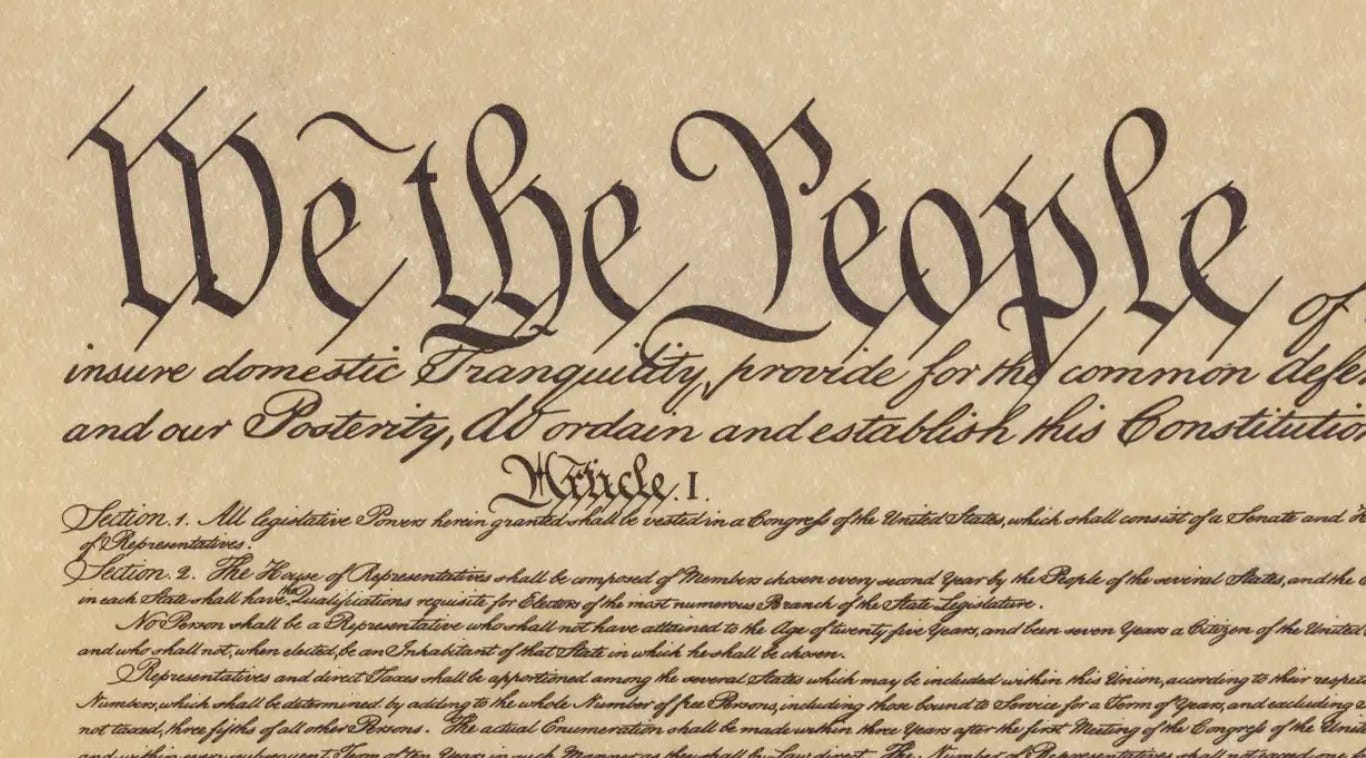
The next 250 years will be defined by whether we can find our way back to the words that made the experiment possible in the first place:
We the People.
Not the ruling class.
Not the permanent bureaucracy.
Not the billionaire class.
Not the activist class.
Not one party.
Not one man.
We the People.
That was the promise at the beginning.
That was the promise Lincoln carried forward at Gettysburg when he called for a new birth of freedom and a government of the people, by the people, for the people.
And that is the promise America must recover now if this republic is not to perish from the earth.
That is the crossroads before us.
And from Morristown, New Jersey — Washington’s headquarters, Jockey Hollow, and one of the historic crossroads of the American Revolution — that question feels more than political.
It feels personal.
Because two hundred and fifty years ago, men froze in these hills, survived against all odds, and held fast to an idea.
Now the question is whether we can still find the path back to it.
🔥 20 Minutes a Week with ZPI = More Political Insight Than Most Insiders.
Zoose® is a multi-patented AI company founded by veteran campaign operative Patrick Allocco, creator of the Zoose Political Index (ZPI), a nonpartisan weekly model of U.S. elections and voter sentiment. Allocco appears regularly on Newsmax to break down the data for a national audience.